
Why clean under the hood?
Why Having Your Engine Bay Cleaned & Restored By A Professional Is One Of The Smartest Things You Can Do For Your Car
Most car owners spend hours getting the paintwork shiny, the wheels spotless, and the interior looking brand new – yet they completely ignore what’s under the bonnet. For many people, the engine bay is a mysterious, off-limits space: something only mechanics look at, or a part of the car that’s “supposed to be dirty”. There’s even a common myth that cleaning it is just for show, or that you’ll end up breaking something if you get it wet.
The truth is, your engine bay works harder than almost any other part of your vehicle. It’s constantly exposed to heat, oil, grease, road salt, grit, rainwater, and grime thrown up from the road – especially here in the UK, where damp, salty winters and grit-covered roads make conditions even harsher. Left uncleaned, that build-up doesn’t just look messy – it causes damage, costs you money, and shortens the life of your car.
Having it professionally cleaned and restored isn’t a luxury or a vanity project. It’s smart, preventative maintenance that protects your vehicle, saves you on repair bills, and keeps your car reliable and valuable for years. Here’s exactly why it’s such a good investment.
1. Stops Corrosion & Costly Mechanical Failures
This is the single most important reason to keep your engine bay clean. Over time, dirt, oil residue, road salt, and moisture pack tight against every surface, component, and wire – and unlike the outside of your car, which dries out quickly, debris under the bonnet holds onto water and chemicals for weeks or months at a time.
In the UK, road salt is the biggest danger. It mixes with dampness and grime to create a highly corrosive mixture that eats away at metal brackets, pipes, fasteners, and electrical connections. You’ll often find rust forming on wiring looms, fuse box bases, brake pipes, or cooling system parts long before you ever see it on the bodywork.
That build-up also causes mechanical problems:
• Dirt acts like insulation, trapping heat around the engine, radiator, and cooling components. This makes your engine run hotter than it should, leading to overheating, reduced efficiency, and premature wear – especially bad in summer or on long motorway drives.
• Grime and grit work like sandpaper, wearing away rubber hoses, seals, and moving parts. This leads to splits, leaks, or seized components long before they should fail.
• Corroded electrical connections cause all sorts of expensive, hard-to-diagnose problems: warning lights, misfires, sensor faults, rough running, or even complete breakdowns.
A professional deep clean removes every trace of salt, grease, and trapped moisture, flushing out corrosion before it can cause permanent damage. It’s the cheapest insurance policy you can buy against engine or electrical failure.
2. It’s 100% Safe – When Done By A Professional
The biggest fear people have is: “If I clean my engine bay, I’ll get water in the electrics and break my car”. And you know what? That risk does exist – if you do it yourself, or go to a basic car wash.
Unskilled cleaning means blasting high-pressure water straight at sensitive parts like the ECU (engine control unit), fuse boxes, sensors, alternators, or wiring connectors. Harsh, generic chemicals are used that strip protective coatings, dry out rubber, or damage plastic components.
But that’s never how a professional detailing contractor works. A proper engine bay valet is carefully controlled, safe, and designed to protect everything:
✅ Sensitive parts are fully masked and sealed before any cleaning starts – so water or chemicals never touch electrics or electronics.
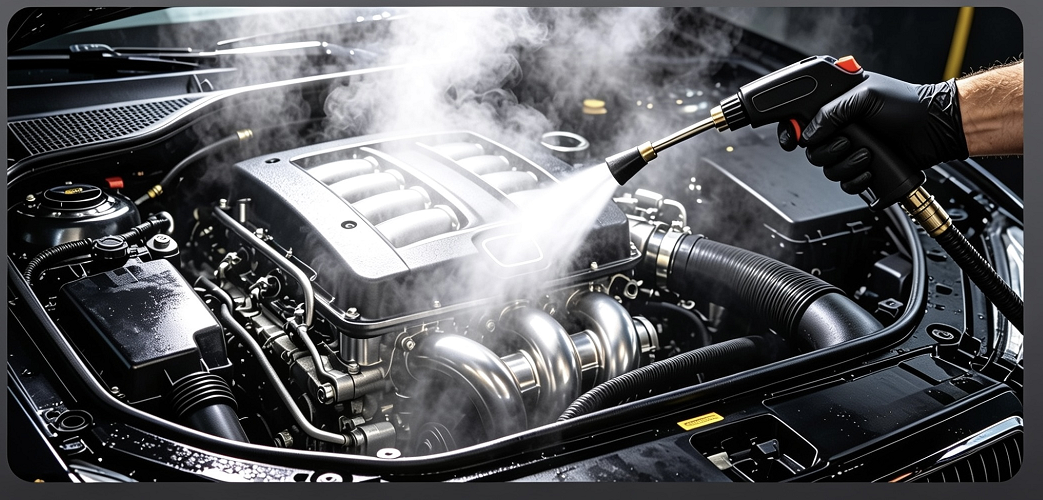
✅ Steam cleaning or low-pressure methods are used, not high-pressure jets. Steam is ideal: it dissolves grease and dirt without soaking components, kills bacteria, and reaches every tiny gap safely.
✅ Specialised, pH-neutral products are used – different cleaners for metal, plastic, rubber, and wiring. They cut through heavy grease and oil, but are gentle enough not to damage or dry out materials.
✅ Every part is carefully dried and inspected afterwards to ensure no moisture is trapped anywhere.
Done properly, it is completely safe – and far safer than leaving corrosive grime to eat away at your car year after year.
3. Spots Hidden Problems Before They Become Expensive Repairs
You can’t fix what you can’t see – and a dirty engine bay hides every issue until it’s too late.
Thick layers of oil, grease, and dirt completely mask small leaks, cracks, or wear and tear. You won’t spot a tiny oil leak, a split coolant hose, a loose clip, or a corroded wire until it turns into a major failure, leaves you stranded, or causes hundreds of pounds worth of damage. Even mechanics struggle to spot faults in a dirty engine bay – leading to longer, more expensive servicing and missed issues.
When you have your engine bay professionally cleaned, every single component is exposed. Small leaks, worn parts, rust spots, or damaged wiring become obvious straight away. You can fix minor problems for a few pounds before they turn into big bills.
It also helps with your MOT. Inspectors check under the bonnet for leaks, corrosion, or damaged components – a clean, well-maintained engine bay reduces the risk of an advisory note or failure, and makes inspections faster and smoother.
4. Preserves & Protects Components Long-Term
Everything under your bonnet is designed to withstand heat and use – but it’s not designed to sit buried in oil, grit, and chemicals for years.
Plastic engine covers, rubber hoses, belts, seals, wiring looms, and rubber grommets all degrade much faster when covered in grime. Oil and chemical residues dry rubber out, making it brittle, cracked, and prone to splitting. UV light and heat make plastic fade, chalk, or crumble – especially once its original factory protective coating has worn away.
A professional clean doesn’t just remove dirt – it restores and protects. After cleaning, your detailer will apply heat-resistant, UV-stable dressings and protectants to all rubber, plastic, and wiring parts. These products nourish materials, keep them supple and flexible, restore their original deep black or colour, and create a barrier against oil, dirt, and heat.
This simple step adds years to the life of hoses, belts, wiring, and plastic parts – all of which are expensive to replace if they fail.
5. Boosts Resale Value & Proves Your Car Has Been Cared For
We’ve said it before in our guides to headlight restoration and wheel arch cleaning: people judge a car instantly by its condition. And when buyers or dealers look at a car, the very first thing they do – even before looking at the paint or interior – is open the bonnet.
A dirty, greasy, messy engine bay screams one thing: this car has been neglected. Even if the outside is shiny and the interior is spotless, a grubby engine bay tells buyers you’ve only cared about appearances, not the important stuff. They will automatically assume there are hidden mechanical issues, and will knock hundreds of pounds off the price or walk away entirely.
A professionally cleaned, tidy, and restored engine bay has the exact opposite effect. It shows you’ve cared for every single part of the vehicle, right down to the smallest detail. It builds instant trust, makes your car stand out from others for sale, and adds real value. For 4x4s, classic cars, performance vehicles, or vans, it’s absolutely essential – it can add £300–£800+ to your sale price, and help you sell much faster.
What Does A Professional Engine Bay Clean & Restore Actually Include?
Just like the difference between a basic car wash and a full detail, a proper engine bay service is worlds apart from a quick spray down:
• ✅ Masking and sealing of all sensitive electrical components
• ✅ Removal of heavy grease, oil deposits, and built-up road grime
• ✅ Steam cleaning of every crevice, pipe, and component
• ✅ Degreasing and removal of bonded contaminants and salt residue
• ✅ Gentle cleaning of painted surfaces, metal parts, and wiring looms
• ✅ Inspection for leaks, wear, or early signs of corrosion
• ✅ Application of heat and UV-resistant dressings to restore rubber, plastic, and hoses
• ✅ Polishing of metal or chrome parts for a clean, bright finish
• ✅ Final inspection and drying to ensure no moisture is trapped
Final Thoughts
Your engine bay is the heart of your car – and like any heart, it needs care and maintenance to keep working properly. Cleaning and restoring it isn’t about making it look shiny for photos; it’s about protecting your car from corrosion, preventing breakdowns, saving money on repairs, and keeping your vehicle reliable, legal, and valuable.
For a relatively small cost, you get years of protection, peace of mind, and a car that holds its value far better than one that’s been neglected. If you’ve never had yours done, it’s easily one of the best investments you can make.