
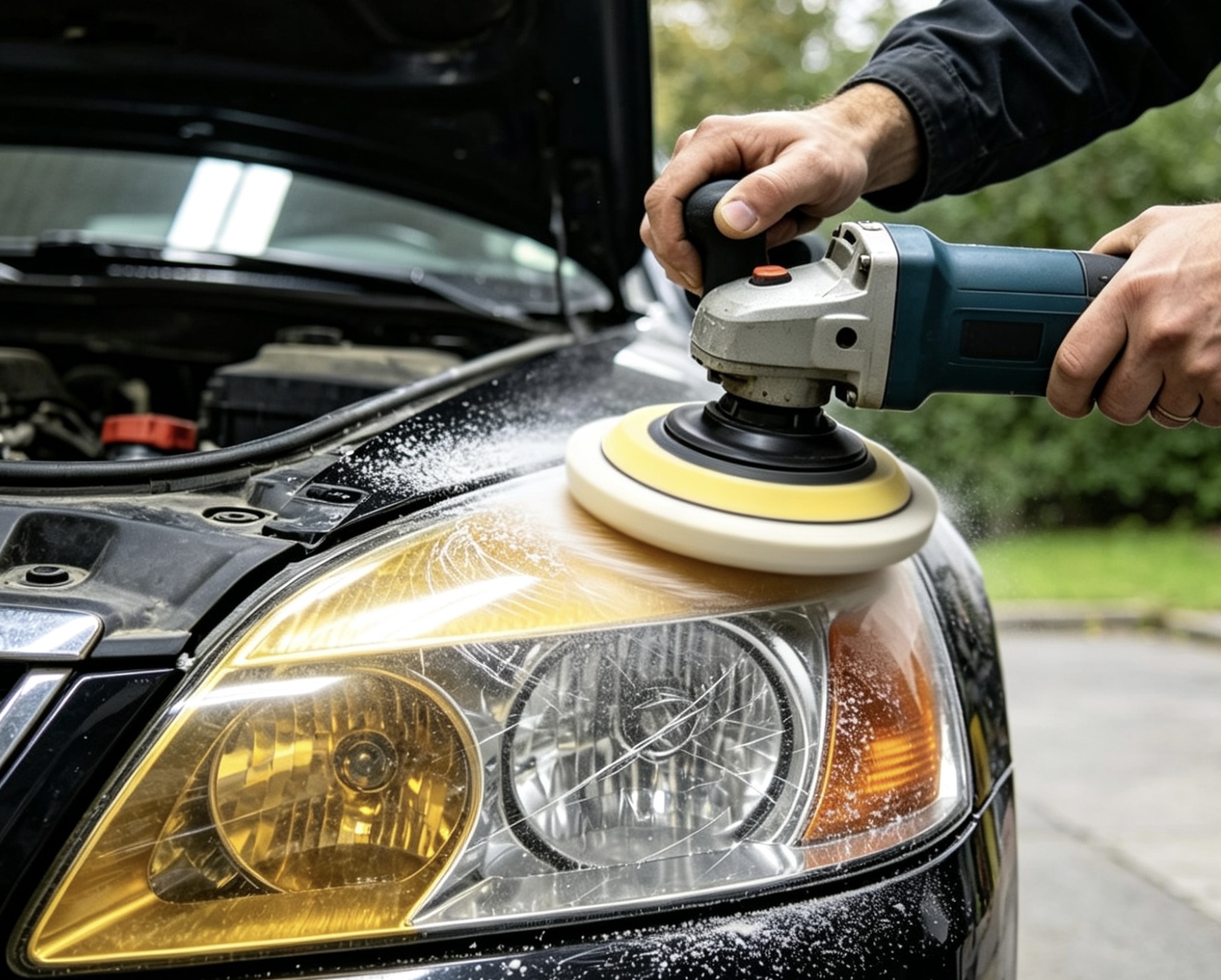
Why have your headlights restored?
From MOT failures to poor driving conditions this blog explains why headlight clarity is so important
Why Restoring Your Headlights Is Far More Important Than You Think
You’ve definitely seen them – cars driving around at night or on dull winter days with dim, yellow, fogged-up headlights that look like they’re made of frosted glass. Most drivers just think it’s a bit unsightly, or that it’s just what happens as a car gets older. Some even try to wipe the haze away or blame dim bulbs, thinking a quick change will fix the problem.
But faded, cloudy headlights aren’t just a cosmetic issue. They’re a serious safety risk, one of the most common reasons for MOT failure, and something that can cost you hundreds of pounds in lost value or unnecessary repairs. In fact, restoring your headlights is one of the smartest, most affordable maintenance jobs you can do – and here’s exactly why.
1. It’s All About Safety – The Number One Reason
This is the single most important reason to get your headlights restored. Over time, that yellow, cloudy haze isn’t just dirt or grime – it’s oxidation that forms on the surface of the lens, and it drastically cuts how much light actually gets through.
Studies show that degraded headlights lose up to 80% of their light output compared to new, clear ones. To put that in perspective: if your headlights are faded, instead of seeing 100 metres ahead on a dark road, you might only see 20 metres – barely enough time to react to a hazard, animal, or pedestrian.
It gets worse, too:
• The rough, oxidised surface scatters light rather than projecting it clearly down the road. This creates blinding glare for oncoming drivers, making the road more dangerous for everyone, not just you.
• In typical UK weather – rain, fog, snow or mist – the effect is multiplied. Moisture clings to the uneven surface of the lens, turning already dim light into a faint, useless glow.
• The decline happens so gradually that you won’t even notice it happening. It’s like the frog-in-boiling-water effect: you get used to dimmer and dimmer light, and only realise how bad it was once you have them restored.
Whether you drive a small hatchback, family car, 4x4 or van, good visibility is non-negotiable. Headlight restoration isn’t about making things look shiny – it’s about making sure you can see, and be seen.
3. Protect Your Car’s Value And First Impressions
We’ve said it before in our guides to detailing and wheel arch cleaning: people judge a car instantly by its condition. Faded headlights make a 3-year-old car look 10 years old, and a well-maintained car look neglected and high-mileage.
When you come to sell or trade in your vehicle, cloudy headlights are an immediate red flag. Buyers and dealers will automatically assume: if the headlights are this bad, what else hasn’t been looked after? They’ll expect hidden rust, mechanical issues or neglected maintenance, and will knock hundreds of pounds off your offer price as a result.
Restoring headlights costs a fraction of the value it adds. A proper restoration makes your car look years younger, fresh and well-cared-for – and can easily add £200–£500 to its resale or trade-in value. For 4x4s, classic cars, vans or any vehicle you want to protect as an asset, it’s an absolute must.
4. It’s A Tiny Cost Compared To Replacement
The biggest mistake drivers make is thinking they need to replace the whole headlight unit to fix the problem. That’s rarely true – and it’s incredibly expensive.
Replacement costs:
• Standard family car: £150–£400 per unit
• 4x4, premium or modern cars with LEDs/DRLs: £500–£1,200+ per unit
• Plus labour, alignment, and often coding or programming for modern electronic systems
You could easily spend £1,000–£2,500+ just to replace a pair of headlights.
Professional restoration costs:
• Just £40–£100 for both headlights, completed to a high standard
• Lasts 2–5 years when sealed with a quality UV-protective coating
• No new parts, no fitting fees, no risk of leaks, poor fit or mismatched parts
It’s not just cheaper – it’s better. You keep your original factory-fitted units, which are almost always higher quality than aftermarket replacements, and you get the same crystal-clear result for a fraction of the price.
Why Do Headlights Fade In The First Place?
Up until the 1990s, almost all headlights were made of glass – which never faded, yellowed or went cloudy. Today, they’re made from polycarbonate plastic: it’s lighter, shatterproof, and safer in crashes, but it has one big downside – it’s soft and porous.
To protect it, manufacturers add a thin, clear UV-resistant coating. Over time, this coating wears away – and the UK is one of the harshest environments for headlights, thanks to:
• Strong UV rays (even on cloudy days!)
• Road salt, grit, diesel fumes and acid rain
• Stone chips and scratches that break the protective layer
• Constant changes in temperature
Once that coating is gone, oxygen gets into the plastic itself, causing oxidation – that yellow, cloudy haze you see. Crucially, this is not dirt. You can’t wash it off, wipe it away, or fix it with a standard polish. It’s damage to the plastic itself, and the only proper fix is professional restoration.
What Does Professional Headlight Restoration Involve?
Just like a wheel arch deep clean or full detail, a proper restoration is far more than a quick wipe or a cheap kit from a petrol station (which will fade again in weeks). It’s a multi-stage process that removes the damage and protects the lens long-term:
1. Protection: The surrounding paintwork is carefully masked off to avoid scratches or damage.
2. Removal: The oxidised, yellow, damaged layer is removed using graded fine sandpaper, working through different grits until all haze and discoloration is gone.
3. Polishing: The lens is machine-polished back to a crystal-clear, glass-like finish, removing all fine scratches and marks.
4. Sealing: This is the most important step. A high-quality UV-resistant coating or ceramic sealant is applied, which acts as a new factory-grade protective layer, stopping oxidation from coming back for years.
Done properly, it’s a permanent fix for years – not a temporary quick fix.
Final Thoughts
Restoring your headlights isn’t a luxury or a vanity project. It’s basic maintenance, just like changing your oil, checking your tyres, or cleaning your wheel arches. It keeps you and other road users safe, keeps your car legal, protects its value, and saves you hundreds of pounds compared to replacement.
If your headlights are looking yellow, dim or cloudy, don’t put it off. It’s one of the best, most affordable investments you can make for your car – and the difference before and after is nothing short of incredible.